The Sun Also Rises and Its Lasting Influence on San Fermín
Ernest Hemingway’s novel, The Sun Also Rises, was published in October of 1926 — marking this year as the novel’s 100th anniversary. To this day, it is still widely consumed by readers and history buffs, leading many to follow in Hemingway’s footsteps. Though being a work of fiction, The Sun Also Rises by Ernest Hemingway is a rare case of a twentieth-century literary piece shaping the perception of a real place — Pamplona — in a very powerful way. Much of the novel’s focus remains on Pamplona, Spain, highlighting the revelry, bull runs, and bullfighting during the San Fermín Festival.
Why Hemingway Wrote the Sun Also Rises
Why did Ernest Hemingway write The Sun Also Rises? Hemingway answered that question for us by emphasizing that his novel was not about celebration or excess, but about the values, honor, and discipline of a post-war world that Hemingway felt had been morally shaken. Pamplona supplied the ideal place for this during the San Fermin Festival, where ritual and celebration mix with chaos. When Ernest Hemingway began writing The Sun Also Rises, he was living in Paris in the 1920s, but drawing inspiration from his many travels in Spain.
Hemingway and Spain
Spain played a central role in Hemingway’s life and writing. This brings us to another question: Where did Hemingway live during his time in Spain? He spent the majority of his time in Madrid, but adventured throughout the country, primarily during the Spanish Civil War.
Ernest Hemingway in Pamplona
In 1923, Hemingway arrived in Pamplona, and continued to visit multiple times over the following decades. By the time The Sun also Rises was published, Ernest Hemingway and Pamplona became inseparable. The fictionalized depictions in his novel were based on real events, real conversations, and real observations that he had.
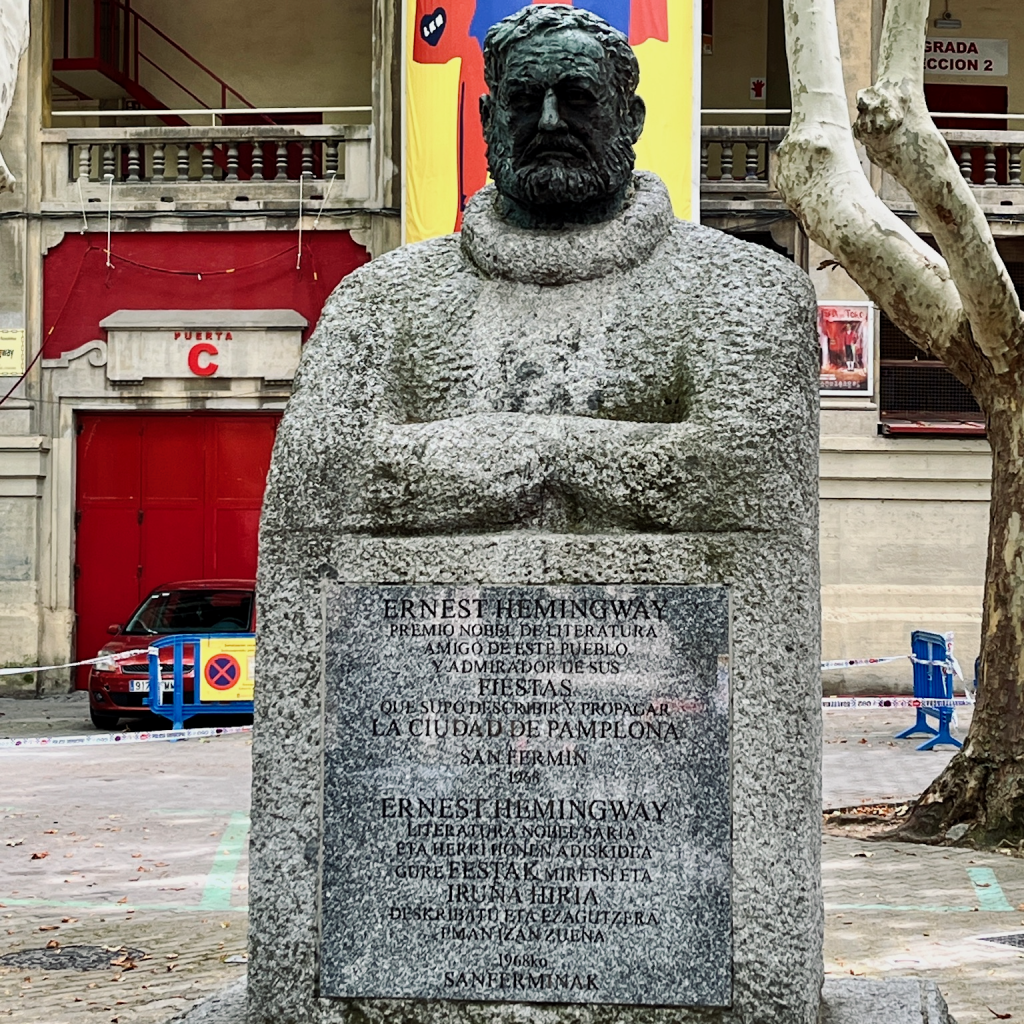
Ernest Hemingway statue outside of the Plaza de Toros in Pamplona
The San Fermin Festival and Bullfighting
The San Fermin Festival, still held annually each year from July 6 to July 14, became a cornerstone of Hemingway’s life. The fiesta’s culture, intensity, and rituals made it ideal for learning about oneself.
Ernest Hemingway pulled a lot of inspiration from the San Fermin bullfights as well. He saw it as an art form, requiring the fighter to be incredibly disciplined and skilled. He liked that it was rooted in tradition and rituals. Some scenes in the novel touched on this, highlighting the courage required to face a bull through the bullfighting character, Pedro Romero.
The Running of the Bulls
When it comes to the Running of the Bulls, the most popular question is: Did Ernest Hemingway actually run with the bulls? We’ll never really know for sure, but historical evidence points to him not participating, opting to be an observer and chronicler of the events instead.
Famous Locations Visited by Hemingway in Pamplona
Ernest Hemingway frequented several notable locations in Pamplona including the famous Cafe Iruna, and other local hotels and restaurants that Hemingway leaves unnamed in his novel. Though those locations remain unnamed in The Sun Also Rises, Hemingway stayed at several local establishments and ate at numerous restaurants. Many of which keep historical accounts of his visits giving fans a glimpse into his adventures.
• Pamplona City Hall (Ayuntamiento)
This is the start and end point of the San Fermín Fiesta. In front of City Hall, thousands gather on Plaza Consistorial, a small square surrounded by balconies and businesses. Both the Txupinazo Opening Ceremonies and the Pobre de Mi Closing Ceremonies take place here. In The Sun Also Rises, this same location is featured as the fiesta begins with a firework rocket launch, just like it does today.
• The Streets of Casco Viejo
Hemingway rarely names the individual streets in his writing, but much of The Sun Also Rises‘ story takes place here. Casco Viejo is Pamplona’s Old Town, where the fiesta, the Running of the Bulls, and the bullfights take place. The novel’s characters walk the narrow streets, witnessing and immersing themselves in the festivities.
• Plaza del Castillo and Café Iruña
In the novel’s Pamplona-based sections, Plaza del Castillo functions as the social center of San Fermín. Located in the heart of Casco Viejo, Plaza del Castillo is where the characters drink and socialize. More specifically, they spend time at Café Iruña, a restaurant and bar at the north end of Plaza del Castillo. Both Plaza del Castillo and Café Iruña are still around today, and the square is home to San Fermín’s biggest concerts — where famous Latin artists play for the massive crowds. Inside of Café Iruña, a bronze statue of Hemingway stands at the bar, welcoming guests to join in the same revelries from The Sun Also Rises.
• Plaza de Toros de Pamplona
In The Sun Also Rises‘ Pamplona chapters, the Plaza de Toros de Pamplona (bullfighting arena) functions as an emotional climax for the characters. They watch, deeply affected, as a talented bullfighter performs. The same Plaza de Toros is still preserved today, and is the location of San Fermín’s daily bullfights, where the world’s most famous bullfighters showcase their skill. Just outside the arena, a statue dedicated to Hemingway welcomes visitors.
• Gran Hotel La Perla
Hemingway stayed at Gran Hotel La Perla during his later visits to Pamplona, after The Sun Also Rises was written. La Perla is located at the northeast corner of Plaza del Castillo. Today, the hotel honors his legacy with a Hemingway Suite and curated artifacts representing his life and influence on the city. The Hemingway Suite is both a rentable hotel room and small museum of Hemingway’s life — a real-life representation of his living memory in Pamplona.
During his writing of The Sun Also Rises, Hemingway actually stayed at the Hotel Quintana in the southeast corner of Plaza del Castillo, which has since been turned into apartments.
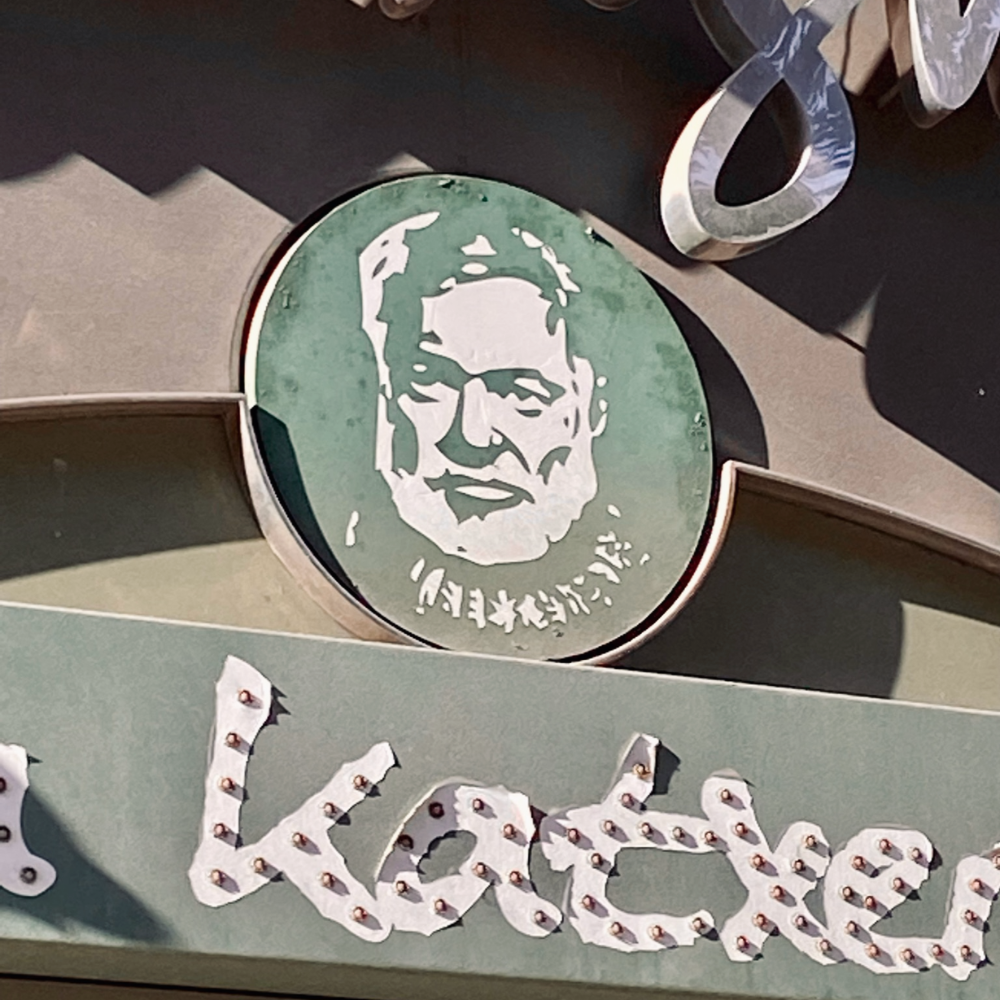
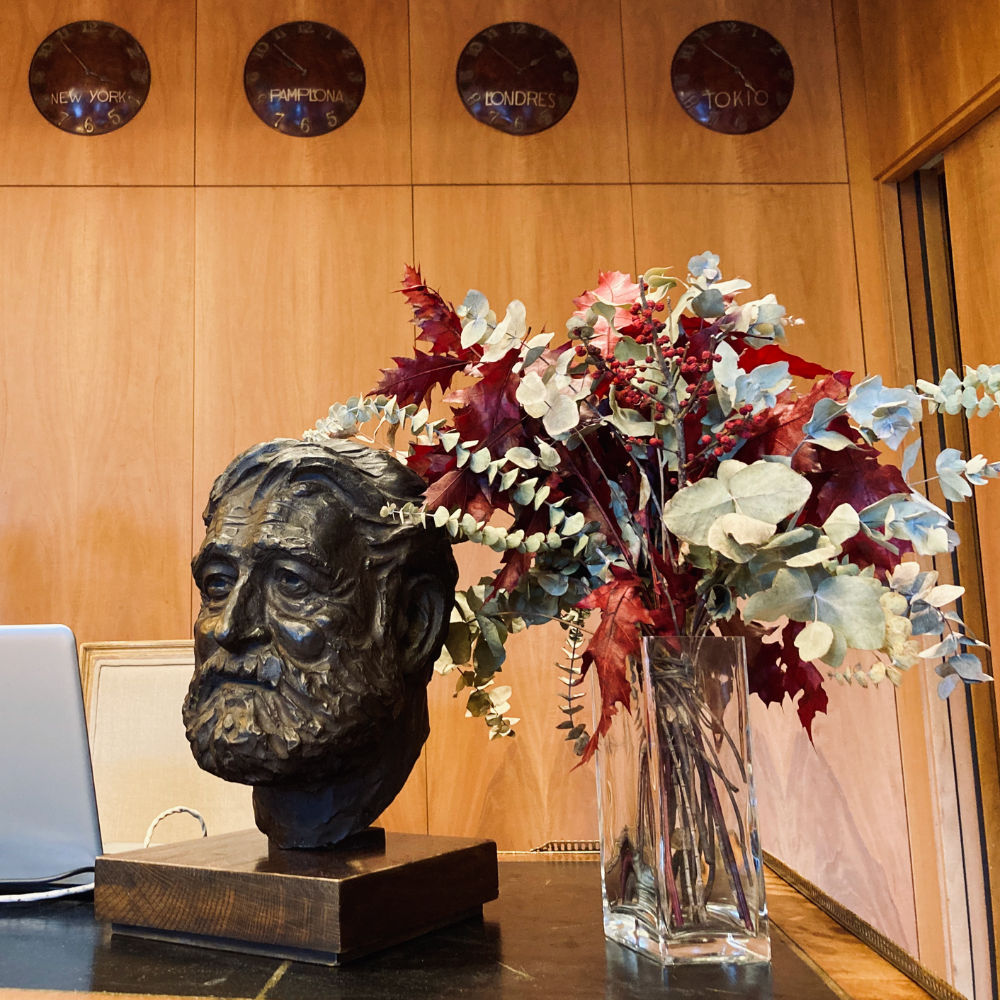
Representations of Ernest Hemingway found in Pamplona, Spain (Left: bar in Pamplona; Right: A statue of Hemingway’s head in Gran Hotel La Perla)
Legacy
As The Sun Also Rises celebrates its 100th year anniversary in 2027, Hemingway’s experiences continue to attract others who want to follow in his footsteps and experience the same things he did.